


Exclusive
In stock
Item #
GO1767
P's & Q's - Sensory Soothers
P's & Q's - Sensory Soothers
Fun Chewable Letters to Encourage Oral Exploration
Regular price
39.00 NIS
Regular price
0.00 NIS
Sale price
39.00 NIS
Quantity


Be Safe
Download
Guidelines for Safe Use
Why We Love It
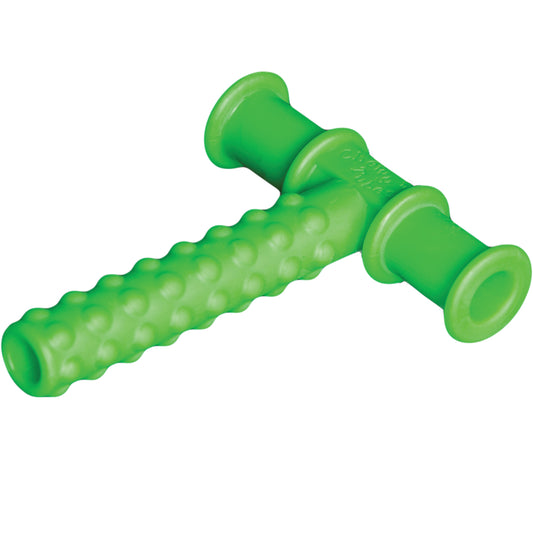
Perfect for practicing biting and chewing skills, the chewable P and Q shapes also encourage tactile exploration for babies, kids and adults. P’s and Q’s are more solid than tubular, so they offer a firmer surface for biting than other chewy tubes and toys. They’ll stand up to heavy nibbling, chewing or biting.
- Provides a unique shape for oral motor exercises
- Perfect for oral motor training and sensory processing
- For kids and adults on the spectrum and those with sensory and motor needs
- Easy to hold, mouth and manipulate
- Age 8 months - Adult
Ideas for Use
Therapists can use P’s and Q’s in their treatment tool-chest as a delightful alternative tool for young patients and older patients alike.
Babies enjoy the Q extension for tongue exploration. Little mouths enjoy grasping the P with their newly developing fine motor skills. As kids practice biting, the chewy stem of the P reaches back into molars sending appropriate proprioceptive input into the TMJ. For larger jaws, the larger Q offers a firm bilateral surface for jaw closure activities.
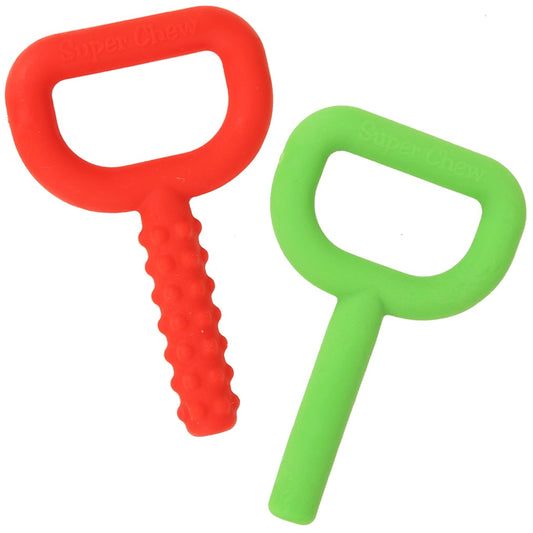
Similar chew tools include Chewy Tubes and Super Chews.This item is not returnable.
Details
- Set includes one P and one Q
- Made from non-toxic, FDA-approved materials
- Do not contain PVC, BPA, phthalates, latex or lead
- Clean with mild soap and water
- Colors: Green or orange


Questions & Answers loading...
Blog Posts
Why Try Occupational Therapy for Sensory Processing Disorder
Many children struggle with everyday activities like getting dressed, eating or going to school. Sensory processing disorders (SPD) can turn these seemingly simple tasks into overwhelming obstacles. It may feel daunting to navigate your child’s sensory needs.

What's Therapeutic about a Weighted Blanket?
The first time I heard about weighted blankets, I had an instant "Ah-Ha! " moment. As a child, I used to love to climb under the blankets on my parents' bed.

3 Tips for Sensory Friendly Haircuts
Does your child resist haircuts at the barber? They might not like the vestibular input of sitting on a chair that gets propelled upwards, feeling the apron around their neck, or the auditory stimulation of surrounding conversations and the buzz of razors. Many parents avoid these haircuts for as long as possible.
Why Try Occupational Therapy for Sensory Processing Disorder
Many children struggle with everyday activities like getting dressed, eating or going to school. Sensory processing disorders (SPD) can turn these seemingly simple tasks into overwhelming obstacles. It may feel daunting to navigate your child’s sensory needs.
What's Therapeutic about a Weighted Blanket?
The first time I heard about weighted blankets, I had an instant "Ah-Ha! " moment. As a child, I used to love to climb under the blankets on my parents' bed.
3 Tips for Sensory Friendly Haircuts
Does your child resist haircuts at the barber? They might not like the vestibular input of sitting on a chair that gets propelled upwards, feeling the apron around their neck, or the auditory stimulation of surrounding conversations and the buzz of razors. Many parents avoid these haircuts for as long as possible.

What Makes
Us Different

Expert Team
We are a group of trained therapists, educators and committed parents devoted to making your world better.

Quality Products
We manufacture versatile, high quality products in small batches with trusted partners.

Commitment to Safety
Our products undergo rigorous safety testing by independent labs to meet and often exceed government standards.

Your Voice
Our collaboration with you is at the heart of our success. We value your ideas, experiences and feedback.

Customer Service
We are committed to going above and beyond to ensure your complete satisfaction with our products and services.


