


Flapping or Jumping? How to Cope with Sensory Overload
3 min read
When your body receives sensory information, your brain processes it and determines the appropriate response. For example, when you hear your name being called, you look up. When you touch something hot, you instinctively pull your hand away. This is part of the body’s natural process for self-regulating. However, kids with a sensory processing disorder (SPD) may not be able to self-regulate, and instead, display inappropriate motor responses when their sensory system is overloaded.
Why Do Kids Flap or Jump?
Hand flapping and jumping are common motor responses among children with autism or other SPDs. These extraneous movements are a way for their bodies to cope with sensory overload and filter information. In fact, if you ever do something like tapping your foot on the floor when you feel uncomfortable, you are displaying a more subtle form of flapping or jumping.

These behaviors aren’t always disruptive but there are times when they are inappropriate. Sometimes the behavior becomes pleasurable and creates a feedback loop. These kids may jump initially as a result of sensory overload, but then they enjoy jumping so much that they continue doing it. Offering replacement behaviors may help break the repetition. Below are some examples of common replacement behaviors you can try out at home.
1. Offer Alternative Input
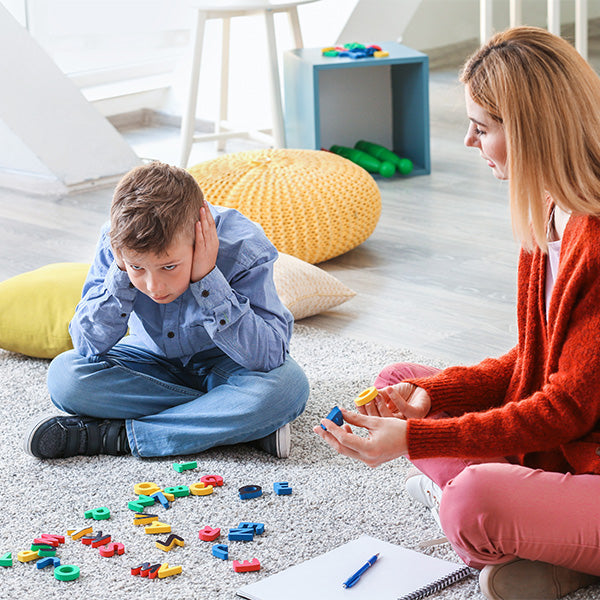
You can refocus your child’s attention by providing different input. For example, offset hand flapping by redirecting their hands to a different activity. Arts and crafts or sensory bins are great ways to keep hands busy. You can also offer putty, fidgets, or even a soft lap pad for soothing tactile input.


2. Get Moving
You might think that kids who hand flap or jump get enough movement in their day, but it could actually be a sign that they’re not. Make sure that there is enough active movement throughout the day to help your child continue to filter sensory input. Work with your child’s occupational therapist to determine the best sensory diet for them. This can help reduce their need to jump or flap when they’re feeling overwhelmed.

3. Watch and Learn
Implement one strategy at a time and observe when your child displays more or less of the extraneous movements. Keep track of each strategy’s effectiveness so that you can determine the best ones for your child. This will require an abundance of patience but it will be worth the effort as you empower your kids to self-regulate!

Do your children flap their hands or jump? How do they cope with sensory overload? Share your strategies and experiences in the comments! Have any questions? Reach out to us at customercare@funandfunction.com.
Check out our variety of calming tools to reduce sensory overload.
This post was originally posted on 11/07/2019 by . It was updated for accuracy and comprehensiveness on 12/15/2021



Comments
My 5 year old daughter is the same. We do heavy work in an effort to calm her and it seems to increase her activity. She is a screamer as well and I would love some suggestions. It seems to be worse in the evenings as everyone is winding down.
Some ideas might be heavy hand work such as chores, baking, cleaning and so forth. Be sure to encourage and reward her efforts. You may also try some strategies that calm such as using a hammock swing or weighted blanket. Please feel free to call us at fun and function to discuss further.
My 6 year old grandson adds screaming to his excessive movements. He gets amped up even after laborious activity TG Y like bike rides & running. No doubt his senses are overloaded but it seems like he always has extra zip in his endurance.
I understand the concern. Consider some other filters for sensory stimulation such as movement (chair push ups, jumping, rocking, walking, etc) both in and out of the classroom, music, visual stimulation, auditory stimulation, vibration, weight and compression (just to name a few). Some of these may minimize the need to flap. Also say “instead of flapping lets do some pushups” to draw positive attention to a new activity.. Hope this helps to think out of the box:)
Also.. he tends to put his hand in his mouth, rub at his eyes and nose a lot too..it’s become a pretty bad habit lately…almost like another stim…what can we do to help him cut back on this behavior? Thanks again! ?
My 9.5 year old son seems to flap his hands a lot when over stimulated by what’s going on around him…or something he is thinking about. A lot of times he flaps when getting really excited…playing ,watching or thinking about a video game he is really into. What can i do to help him control the hand flapping when in school and outside in social situations? So that it’s not so distracting and disruptive to others around..or to himself. He has fidget spinners but don’t always use them…they are not allowed in the classrooms anymore. He needs something to help him control his body and find other ways to get that swimming energy out in certain situations. Another thing…. he doesn’t even realize he is stimming when he does it sometimes…it’s just automatic. Anyway…any tips, hints and advise would greatly be appreciated. Thank you! ?
I’d also suggest a lot of heavy work and then a calming space for him. We can give you more information for heavy work if you’d like to call us at fun and function.
You might want to try some other heavy work activities such as heavy hand work, chewing, sucking, blowing, wind instruments, exercise, chores, and so on.
Would have liked some info on what to do about jumping.
Leave a comment